
Conveyors built to
your line.
We make conveyors to order in mild steel and stainless steel, in runs up to 100 feet, for poultry sheds, pack houses and factories. Belt, roller, modular, inclined, and the short transfer pieces that decide whether a line runs or jams.
Download the brochure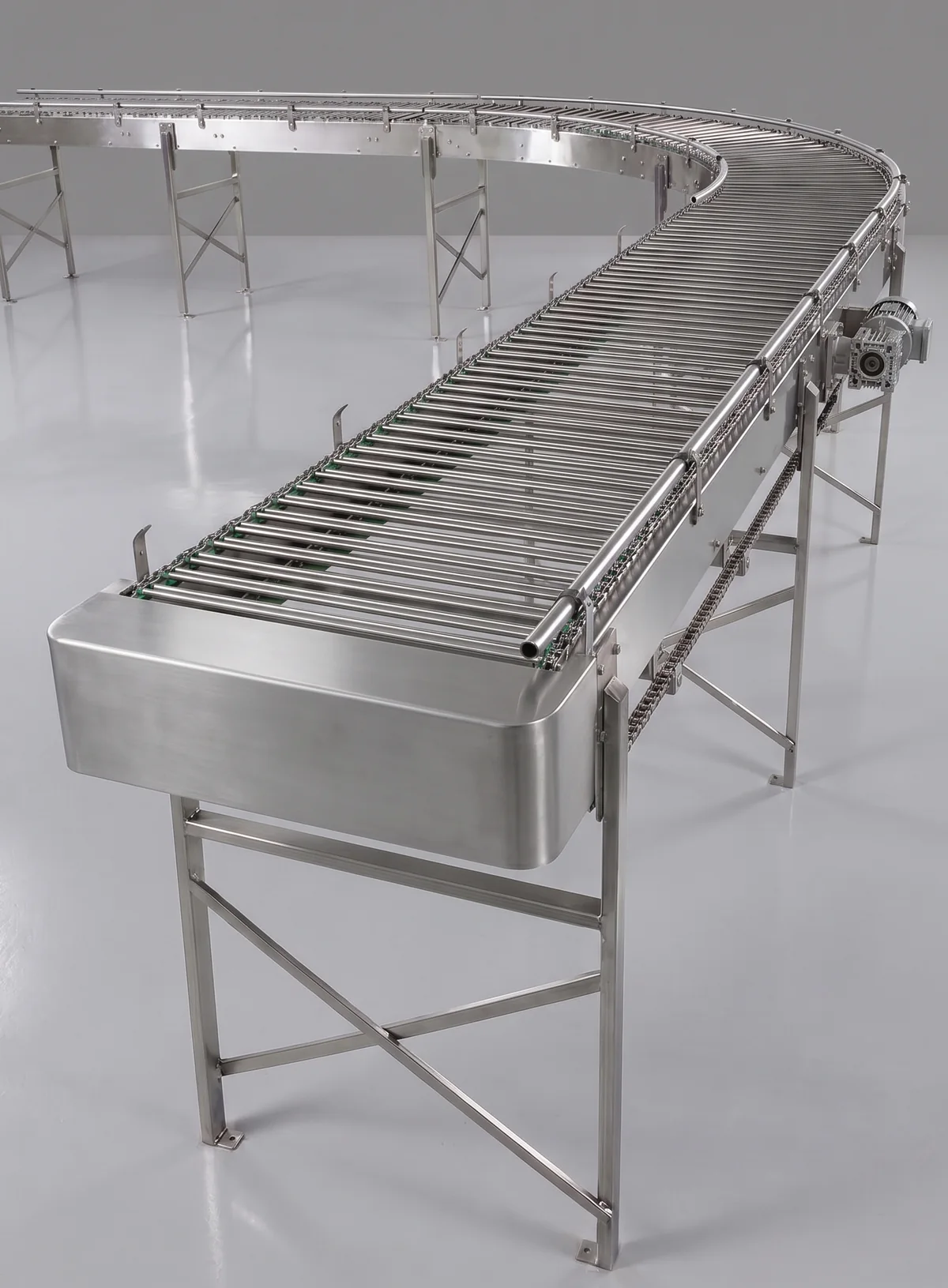
What we build
A conveyor is the part of a line nobody specifies until it is missing. We build them the same way we build graders: measured to the building, made in our own shop in Mohali, and joined to whatever machine sits at each end, ours or somebody else’s. Mild steel where it stays dry, stainless where it gets washed, and a drive sized for the load rather than for the catalogue.
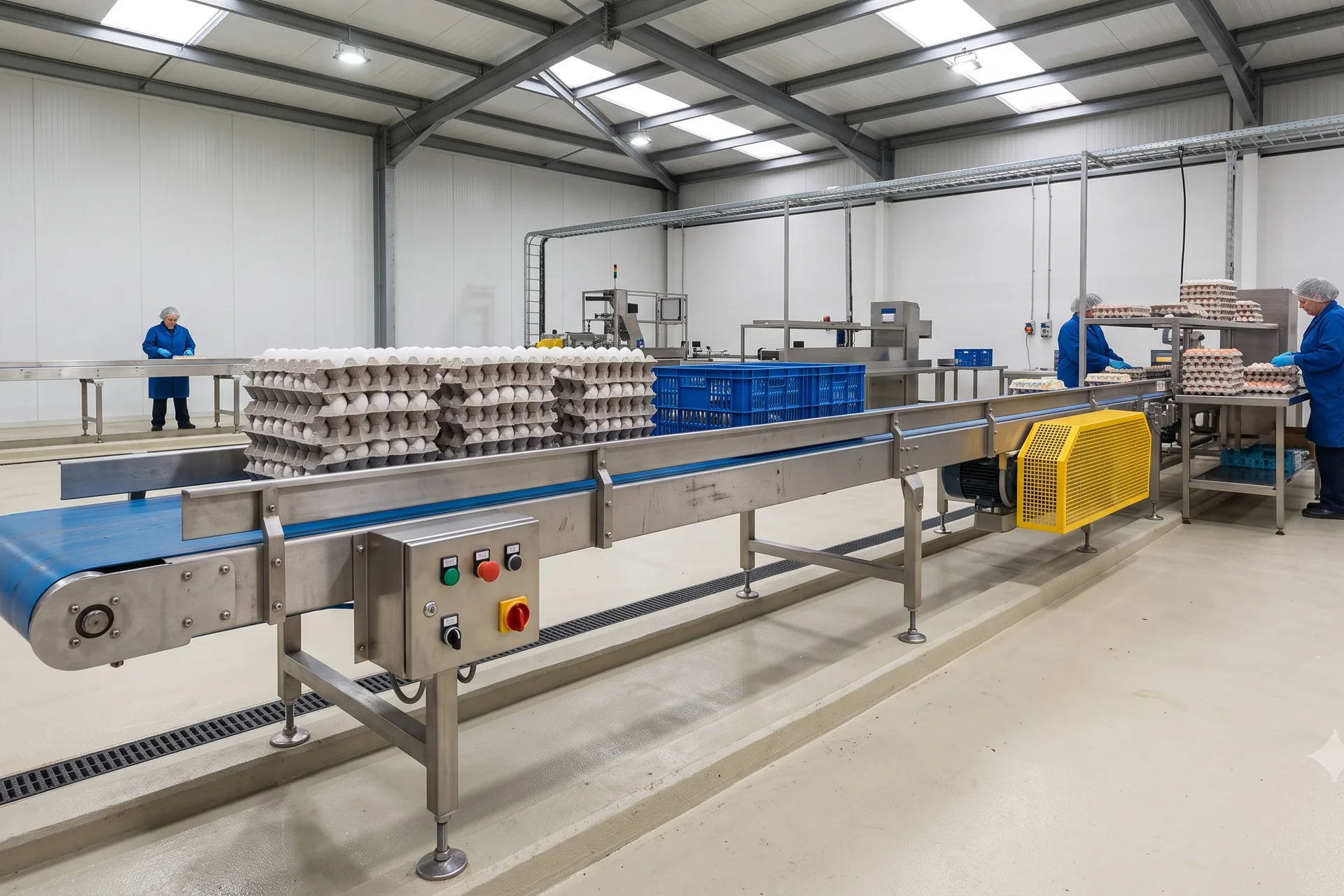
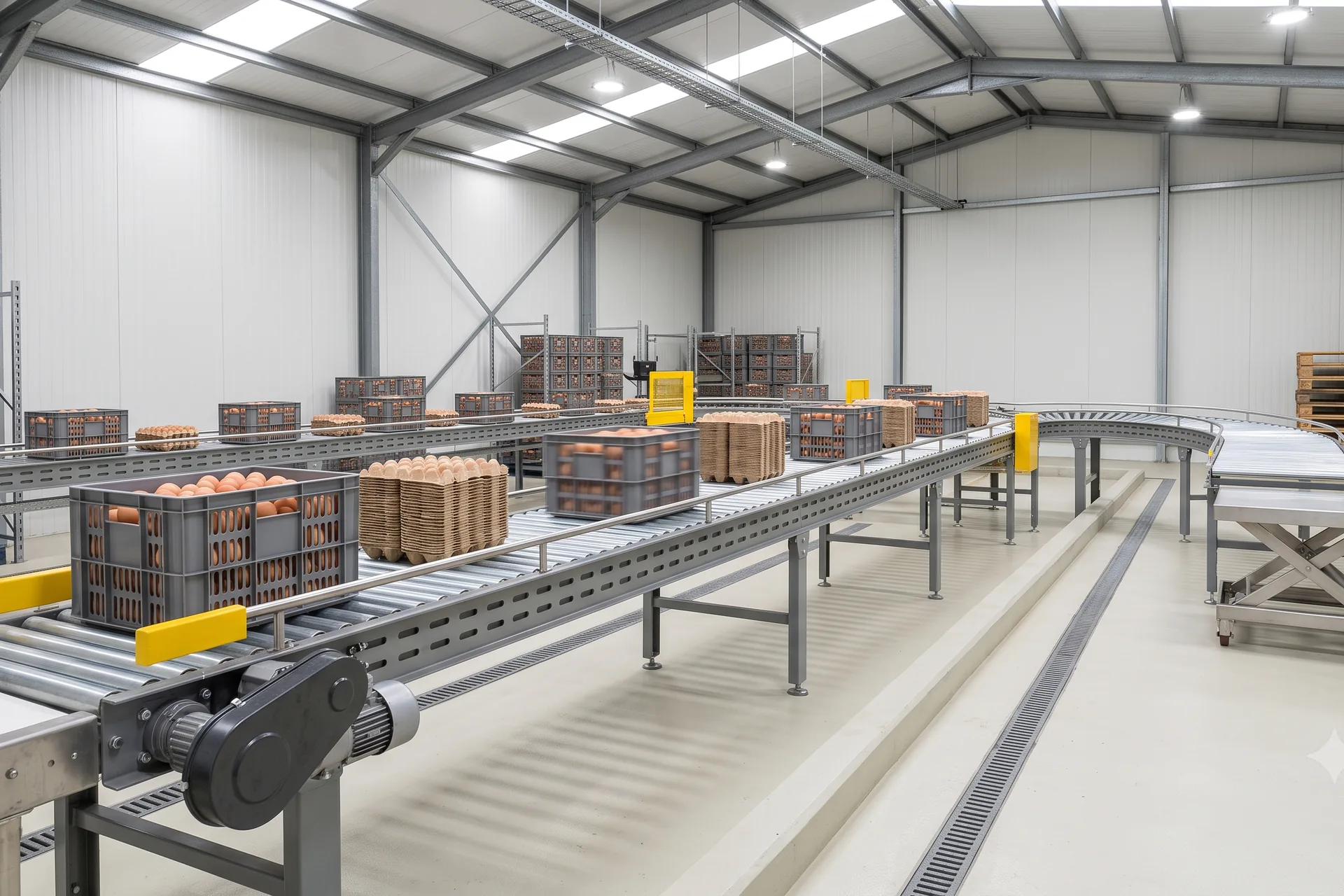
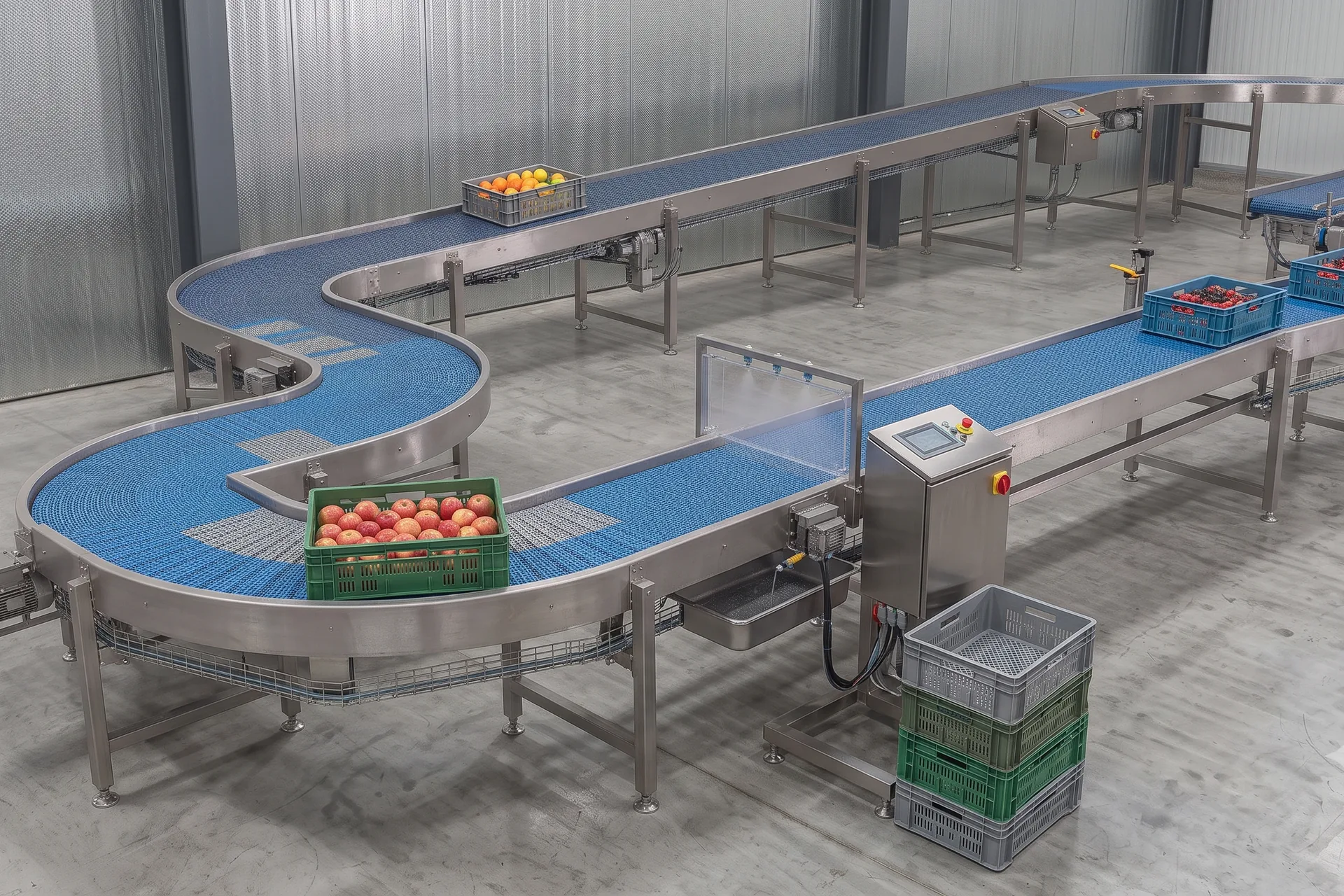
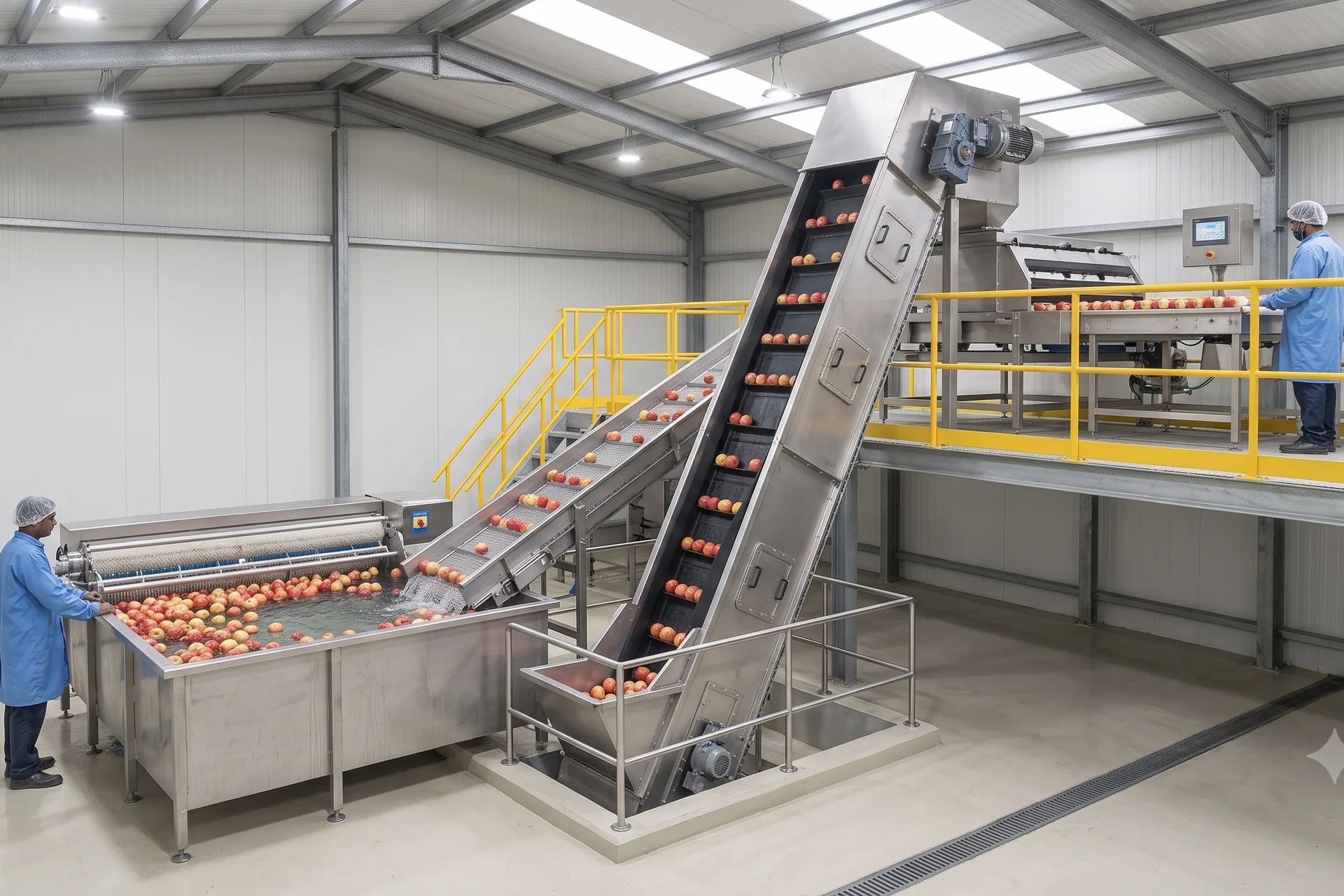
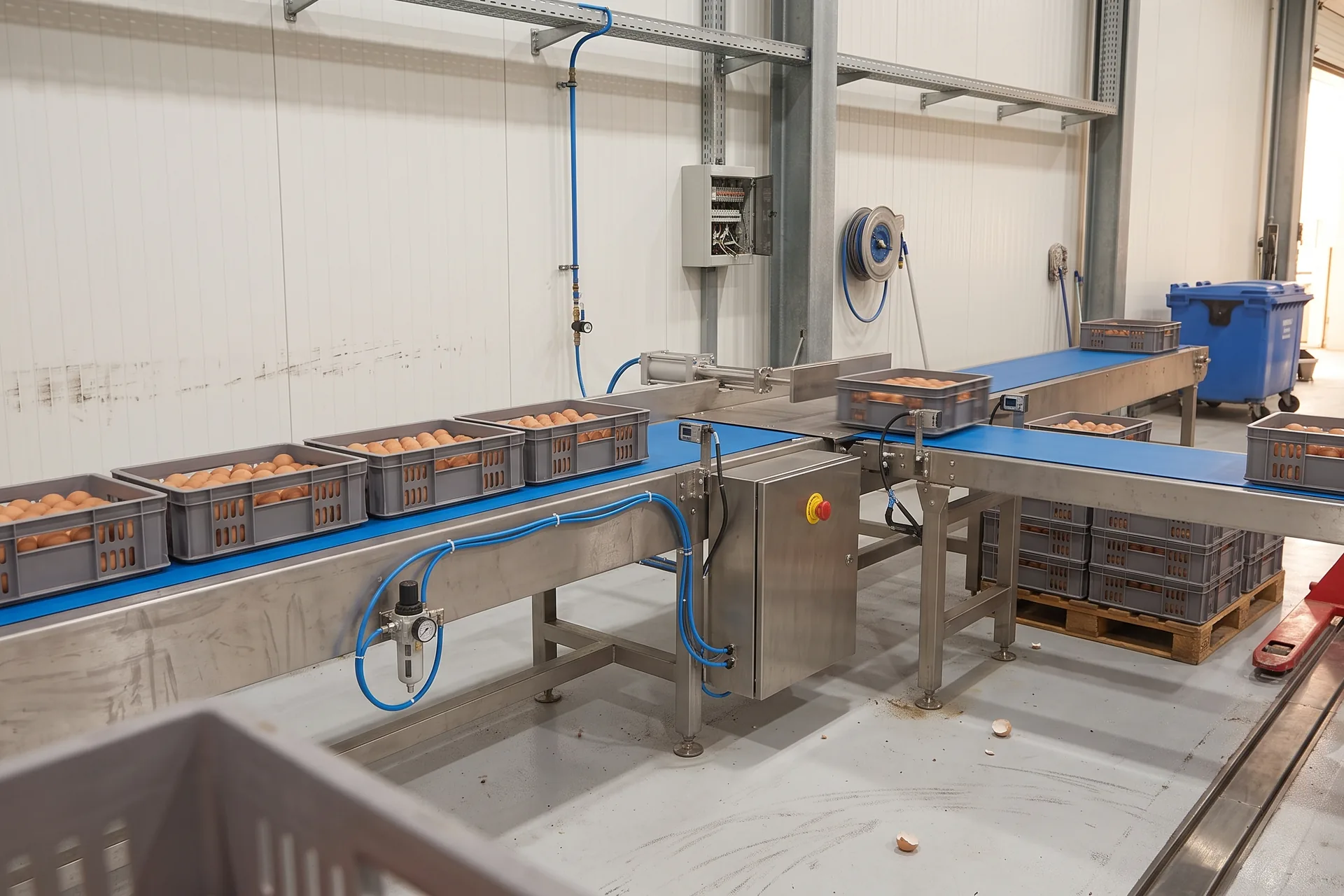
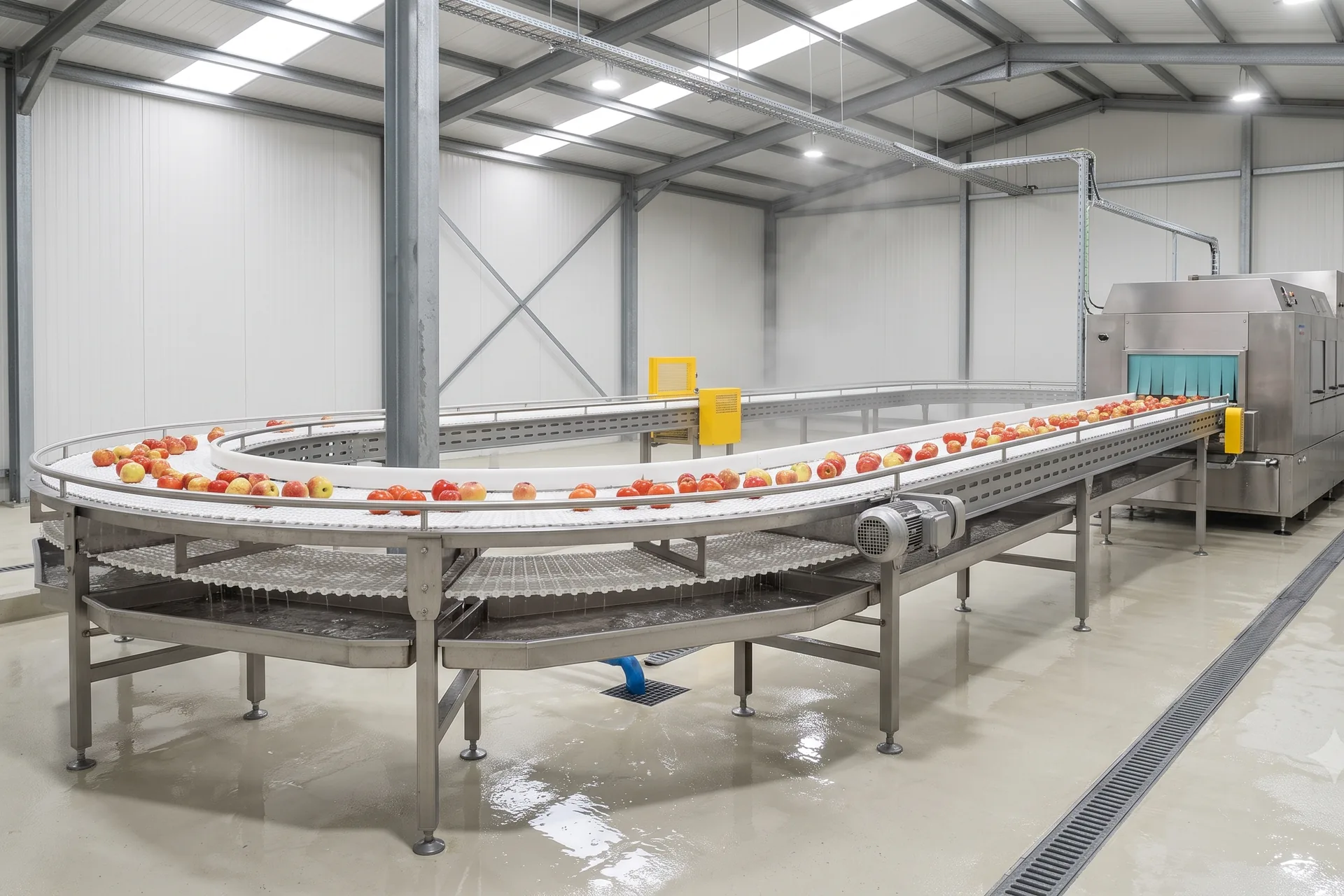
Six shapes, and the reason for each.
Which one you need is decided by what the product is and what the room does to it.
Belt conveyors
A food-grade PVC or PU belt over a steel bed. The general workhorse: eggs in trays, cartons, crates, produce and bagged feed. Flat, inclined or declined.
Roller conveyors
Driven or gravity rollers for anything with a flat, rigid base. Trays, crates and boxes move along a packing hall with very little to wear out.
Modular and slat belts
A plastic modular belt that can turn corners, run wet, and take a knife-edge transfer. The choice where the line has to bend around a building rather than run straight.
Incline and elevating runs
Cleated or sidewall belts that lift product between floors or over a walkway, so a line does not have to stop where the building does.
Transfer and accumulation units
The short pieces that decide whether a line runs or jams: transfers between two machines, accumulation tables that buffer a packer, and diverts to a second lane.
Wash-down and manure lines
Sealed drives, drainable frames and belts chosen for a shed that gets hosed down. Litter and manure runs are built to be cleaned, not just to move.
Four builds, and where each belongs.
Mild steel, powder coated
The standard build for dry areas: feed rooms, packing halls, warehouses. Cheaper than stainless and lasts well where it stays dry.
Mild steel, galvanised
For humid sheds and outdoor runs. Galvanising takes the moisture a poultry house throws at a frame without the cost of full stainless.
Stainless steel 304
Food-contact and wash-down areas: egg rooms, grading halls, anything an auditor will look at. Welded, ground and passivated.
Stainless steel 316 on request
Where the wash chemistry or the salt load is harder than 304 should be asked to handle.
Every build gets food-grade belting where the product touches it, sealed geared drives, and guards on the drive end. Frames are made in sections so a long run fits through a door.
Five things and we can price it.
You do not need a drawing. A photograph of the gap you want filled, with a tape measure in it, is enough to start.
- 01
What it carries
Eggs, trays, crates, fruit, feed, litter, cartons. Weight per piece or per metre if you know it.
- 02
How far, and what shape
Total run, and whether it is straight, has a bend, or has to climb. A rough sketch on paper is enough.
- 03
Width
The width of the product, or the width you already run, if this is replacing something.
- 04
Mild steel or stainless
Or tell us the room and we will say which one it should be.
- 05
Dry or wash-down
Whether it gets hosed, and how often. This changes the frame, the drive and the belt.
We build the machines at both ends.
Most conveyor faults are transfer faults: a product that tips at the hand-over, a gap that eats a small item, a speed on one side that does not match the other. We build graders, washers and packers, so the transfer is a thing we design rather than a thing we leave to the two suppliers on either side.
Parts are made in the same shop, which means a worn roller or a broken sprocket is something we can make again rather than something you hunt for. We answer within a day, send stocked parts within a day, and quote a custom part case by case.
Before you enquire.
How long a conveyor can you build?
Runs of up to 100 feet in a single line, and longer than that as linked sections with their own drives. Past a certain length a single drive is the wrong answer, so we split it and hand the product from one section to the next.
Mild steel or stainless steel: which do I need?
Stainless 304 anywhere the product touches the frame or the area is washed down, which usually means the egg room and the grading hall. Powder-coated or galvanised mild steel for dry areas such as feed rooms, stores and packing halls. Tell us the room and we will tell you which one, and what the difference costs.
Can you connect a conveyor to a machine you did not build?
Yes. Most of the transfers we build join something of ours to something of somebody else. We need the discharge height, the discharge speed and a photograph of the end of the existing machine.
Do you install it, or just deliver it?
Either. We install and commission across India, and we deliver knocked down where your own team will erect it. Say which you want when you enquire, because it changes how the sections are made.
Do you build conveyors for industries other than poultry?
Yes. The same shop builds for fruit and vegetable pack houses, feed mills, cold stores and general factories. Poultry is where most of them go because that is where our grading machines go.
How do I get a price?
Send what it carries, the run length, the width, mild steel or stainless, and whether it is washed down. A drawing or a photograph helps. We answer within one working day.
Tell us the gap.
What it carries, how far, how wide, mild steel or stainless, and whether it gets washed. We answer within one working day.